Total: $0.00
Taxes and shipping calculated at checkout

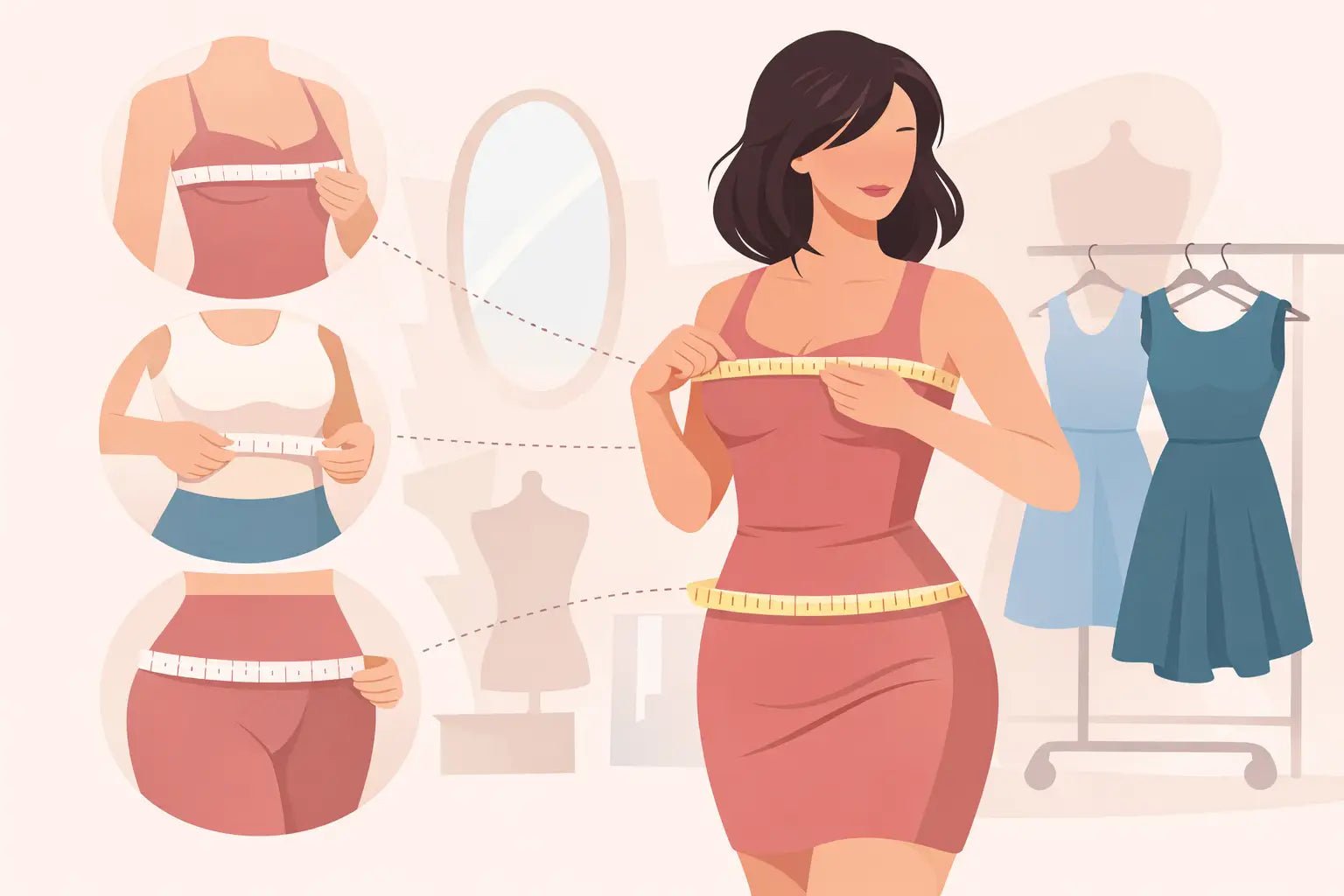
A beautiful dress should feel like it was chosen for you, not like a guessing game. Knowing how to measure bust waist hips gives you a clearer starting point when shopping online, whether you love a fitted midi, an easy everyday maxi, or a celebration-ready mini dress. A few accurate numbers can make choosing a size feel simpler, more comfortable, and much more confident.
You only need a soft, flexible measuring tape, a mirror, and a few quiet minutes. A fabric tape measure is best because it follows the natural curves of your body without pulling or standing away from the skin. If you do not have one, use a piece of string, mark where it overlaps, then measure that length against a ruler or standard tape measure.
Wear lightweight clothing or measure over underwear for the most useful result. Thick sweaters, jeans, or shapewear can change your numbers, especially at the waist and hips. Stand naturally with your feet close together, shoulders relaxed, and weight balanced evenly. You are measuring your body as it is, not as you think it should be.
Keep the tape level with the floor and comfortably snug. It should rest against your body without digging in or leaving extra space. Looking in a mirror helps you catch a tape that has slipped lower in the back, which is one of the most common reasons measurements come out wrong.
Take each measurement twice. If the two numbers differ, take a third measurement and use the number that is most consistent. Write the results down in inches, since most US clothing size guides use inches.
Wrap the tape around the fullest part of your bust, usually across the center of your chest and around your shoulder blades. Keep your arms relaxed at your sides while you measure. If lifting your arms to hold the tape changes its position, ask someone to help or use the mirror to make sure the tape stays straight.
Breathe normally. Do not hold your breath or pull the tape tightly to create a smaller number. Your bust measurement should allow you to sit, move, and enjoy your day in the dress, not just stand still in front of a mirror.
For dresses with a structured bodice, a fitted waist, or little stretch, this measurement is especially helpful. If your bust falls between two sizes, the larger size is often the more comfortable choice, particularly for woven fabrics. A tailor can usually refine a waist or strap more easily than adding room through the bust.
Your natural waist is the narrowest part of your torso, generally above your belly button and below your rib cage. It is not always where the waistband of your favorite jeans sits. An easy way to find it is to bend gently to one side. The crease that forms is close to your natural waist.
Stand upright again and wrap the tape around that point. Let the tape rest comfortably against your skin. You should be able to slip one finger underneath it without forcing it. This small amount of ease matters for dresses you will wear to work, dinner, a shower, or any occasion that involves sitting and moving naturally.
Some dresses sit at the natural waist, while others have an empire waist just below the bust or a dropped waist closer to the hips. Check the product description and garment details when available. Your natural waist measurement is still a useful foundation, but the placement of a dress waist can affect which number matters most.
For your hip measurement, stand with your feet together and wrap the tape around the fullest part of your hips and seat. This is usually about 7 to 9 inches below your natural waist, but every body is different. The mirror is particularly useful here because the tape can rise in the back without you noticing.
Avoid measuring only around your hip bones. For dress sizing, you want the fullest circumference, including your hips and fullest seat. This number is essential for body-skimming midi dresses, pencil silhouettes, fitted maxi dresses, and styles with little stretch.
If you are between sizes at the hip, consider the fabric and shape. A relaxed A-line skirt may offer plenty of room, while a fitted knit or woven sheath may call for the larger size. Your goal is a dress that moves with you and keeps its elegant line, not one that feels restrictive after an hour of wear.
Once you know your bust, waist, and hip measurements, compare them with the size chart for the specific dress you are considering. This step matters because sizing is not perfectly universal. A medium in one silhouette may fit differently than a medium in another, especially across brands, fabrics, and cuts.
Start with the measurement that matters most for the dress shape. For a fitted bodice, prioritize the bust. For a defined-waist dress, focus on the waist. For a close-fitting skirt, let the hip measurement guide you. If your measurements point to different sizes, choose based on the least forgiving area of the garment.
For example, someone may measure as a medium at the bust, a large at the waist, and a medium at the hips. In a wrap dress with an adjustable tie, the medium may work beautifully. In a zip-back dress with a firm waistband, the large may be the better choice. The right answer depends on construction, stretch, and how you want the dress to feel.
At JSandiClothing, the goal is effortless style for every body, which is why checking a garment's measurements and fit details can be more valuable than relying on a label alone. A size chart is not a judgment. It is a practical tool for finding the fit that lets you feel polished and at ease.
Measurements are your starting point, but fabric changes the fit experience. Stretchy jersey, ribbed knits, and fabrics with elastane may comfortably accommodate a small difference between your measurements and the chart. Structured cotton, satin, linen blends, and lined woven dresses often have less give, so a closer match is wise.
Also look for fit notes such as fitted, relaxed, bodycon, oversized, smocked, or adjustable. Smocking at the back can offer flexibility through the bust or waist. Adjustable straps can improve the fit through the upper body. A belt can define a looser silhouette, but it cannot create more room where a dress is too tight.
Length is another useful detail, especially with midi and maxi styles. Bust, waist, and hip measurements help you choose a size, while the listed dress length helps you picture where the hem may fall on your frame. Both details work together to help you choose with confidence.
The most frequent mistake is pulling the tape too tight. A smaller measurement may seem appealing on paper, but it can lead to a dress that pinches, rides up, or feels uncomfortable through the day. Measure for your real body and the life you plan to live in the dress.
Another mistake is measuring over bulky clothing or with feet spread apart. Both can alter the result. Finally, do not assume an old measurement is still your current measurement. Bodies change for many normal reasons, and updating your numbers before a special event or seasonal wardrobe refresh is a thoughtful act of self-care.
Save your bust, waist, and hip measurements in your phone notes, along with the date you took them. Recheck them every few months, or whenever you notice your favorite dresses fitting differently. This makes future shopping quicker and helps you spend less time second-guessing each size.
Your measurements are simply a way to make fashion work better for you. Choose the size that supports comfort, movement, and the version of yourself who is ready to walk into the room feeling beautifully put together.