Total: $0.00
Taxes and shipping calculated at checkout

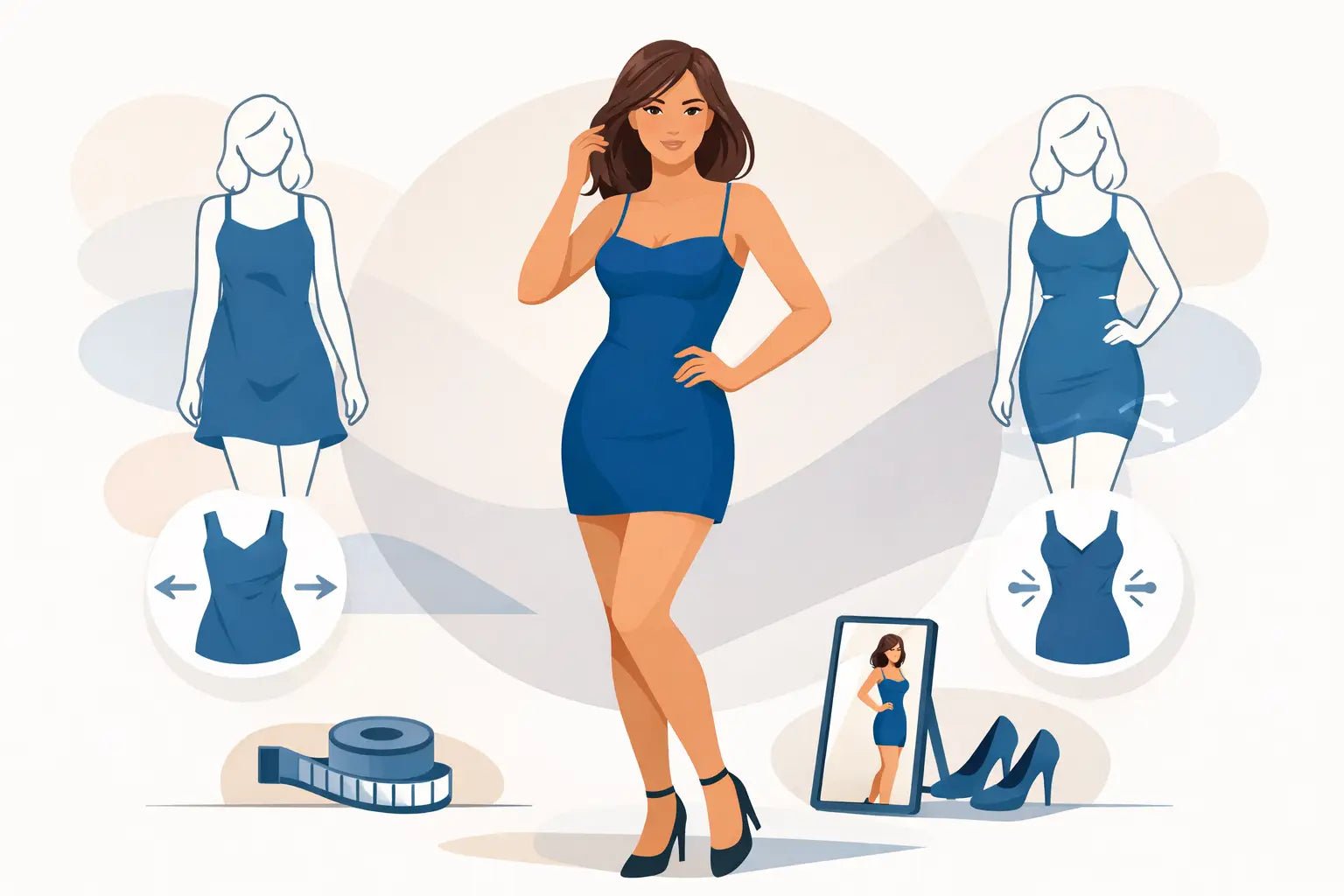
The best mini dress does not make you spend the evening tugging at the hem, holding your breath, or wondering whether you can sit down comfortably. If you have asked, “how should a mini dress fit?” the short answer is: close enough to feel polished, easy enough to move through real life with confidence.
A mini dress can be playful, elegant, casual, or dressed up for a celebration. The right fit is less about following one rigid rule and more about finding the balance of length, shape, coverage, and comfort that feels like you. Here is what to look for before you step out.
A well-fitting mini dress should follow your shape without restricting it. You should be able to walk at a natural pace, sit down, lift your arms, and breathe comfortably. The fabric should lie smoothly across the bust, waist, hips, and back rather than pulling, bunching, or riding up.
Mini dresses naturally show more leg, but they should still offer coverage you can trust. For many women, a comfortable mini length lands around mid-thigh. That said, height, torso length, and personal style all affect where a hem falls. A dress that looks like a mini on a taller woman may fall closer to the knee on a petite woman, while the same style may feel shorter on someone with a longer torso.
The goal is not to make your body fit a dress. It is to choose a dress that supports the way you want to feel: feminine, secure, and ready for the plans ahead.
The hem is usually the first thing people think about with a mini dress, and for good reason. Stand straight, then sit, walk a few steps, and raise your arms. A good mini dress may shift slightly as you move, but it should not rise so high that you feel exposed or need to pull it down repeatedly.
If the hem feels borderline when you are standing still, it will probably feel too short once you are moving. Consider sizing up, choosing a style with a little more length, or trying a dress with shorts built in if you want the mini look with extra ease.
Body proportions matter here. Petite shoppers may prefer shorter styles that create a longer-looking leg line, while taller shoppers may appreciate a slightly longer mini or a style with a lower waist seam. There is no universal “right” number of inches. The right length is the one that lets you move with confidence.
A mirror test from the front is helpful, but it is not enough. Turn to the side and back to see whether the fabric pulls across the hips or seat. If possible, take a quick photo or video while walking. Movement shows you far more than a still pose does.
Pay attention to whether the dress climbs up at the back. This can mean the style is too small through the hips, the fabric has too little stretch, or the dress is not proportioned for your shape. Going up a size may solve the issue, though a different silhouette can be the better answer.
At the bust, a mini dress should sit flat without gaping, puckering, or pressing into your skin. You should not see horizontal pulling lines across the chest or feel the neckline shifting every time you move.
For fitted bodices, use your fullest bust measurement as a key reference when checking a size guide. If your bust and waist fall into different sizes, choose based on the area with the least give. A woven dress with a zipper usually has less flexibility than a stretchy knit, so the measurements matter even more.
Neckline choice can also change how secure a mini dress feels. A higher neckline or wrap style may offer more coverage for daytime plans, while a square neck, sweetheart neckline, or V-neck can create a more elevated date-night look. Neither is better. The best option is the one you are not constantly adjusting.
The waistline shapes the whole dress. It should land where the dress is designed to define your frame, whether that is your natural waist, slightly above it, or lower on the torso. When the waist seam sits in the wrong place, even a beautiful dress can feel awkward.
A fitted mini dress should feel gently held at the waist, not squeezed. If the zipper is difficult to close, if the seam digs in when you sit, or if the fabric creates deep wrinkles across your middle, the size or cut is likely too small. On the other hand, if the waist spins around, collapses, or loses its intended shape, it may be too large.
An empire waist, which sits just below the bust, can feel especially comfortable for events with dinner or longer wear. A wrap mini dress can offer adjustable definition, while a shift dress gives you more room through the waist and hips. These are useful options when you want a polished look without a close-fitting feel.
“Ease” is the extra room built into a garment so you can move comfortably. In a mini dress, that room matters most through the hips and seat. The dress can be fitted without being tight.
Look for smooth fabric at the hips when you stand and sit. Pulling lines, a hem that flips upward, or a zipper that waves or separates can indicate that the fit is too snug. A bodycon dress may have more stretch and can fit closer, but it should still recover its shape instead of feeling strained.
If you carry more shape through the hips or thighs, A-line, fit-and-flare, and softly ruched mini dresses often give you a little more breathing room. This is not about hiding your body. It is about choosing a silhouette that lets the fabric work with your proportions rather than against them.
Two dresses labeled the same size can fit very differently. Fabric changes everything. Stretch knits, ribbed fabrics, and styles with elasticized panels may offer more flexibility. Structured cotton, satin, tweed, denim, and lined woven dresses generally require a more precise fit.
A fabric with stretch can feel comfortable in a closer silhouette, but too much stretch may cause it to ride up as you walk. A structured fabric tends to hold its shape and look more tailored, though you may want a little more room at the bust, waist, or hips.
Lining also deserves attention. A dress can feel comfortable on the outside but restrictive underneath if the lining has no give. When you are between sizes, consider the fabric composition, the dress shape, and how you plan to wear it. For a long event, a little extra ease is often worth more than an ultra-snug fit.
Your usual dress size is a starting point, not a promise. Brands use different fit models, and style details can shift the measurements significantly. Taking a few minutes to measure your bust, waist, and hips can make online dress shopping much easier.
Measure around the fullest part of your bust, the narrowest part of your waist, and the fullest part of your hips with the tape held level and comfortably close. Then compare those numbers to the individual size guide. If you are between sizes, think about the fabric and silhouette before deciding.
For a fitted, non-stretch mini, sizing up is often the more comfortable choice, especially if your hips or bust fall into the larger size. For a relaxed shift dress, you may prefer the smaller size if you want a neater shape. Free returns can make trying two sizes a practical option when you want to compare fit at home without pressure.
The right underlayers can help a mini dress look and feel better, but they should not be doing all the work. Smooth shorts, lightweight shapewear, or a supportive bra can add confidence and prevent chafing, especially for warm-weather events. The dress itself should still fit comfortably before you add anything underneath.
Shoes change the overall balance, too. Sneakers or flat sandals make a mini dress feel easy for daytime. Boots can add coverage and a little edge. Heels create a more dressed-up line, but only choose them if you can walk comfortably. Personal style looks its best when you are not distracted by discomfort.
A mini dress should make getting dressed feel simpler, not more stressful. Choose the size and silhouette that let you enjoy the compliment, the celebration, the dinner, or the ordinary Tuesday. When you feel secure in the fit, you have more room to let your personal style shine.