Total: $0.00
Taxes and shipping calculated at checkout

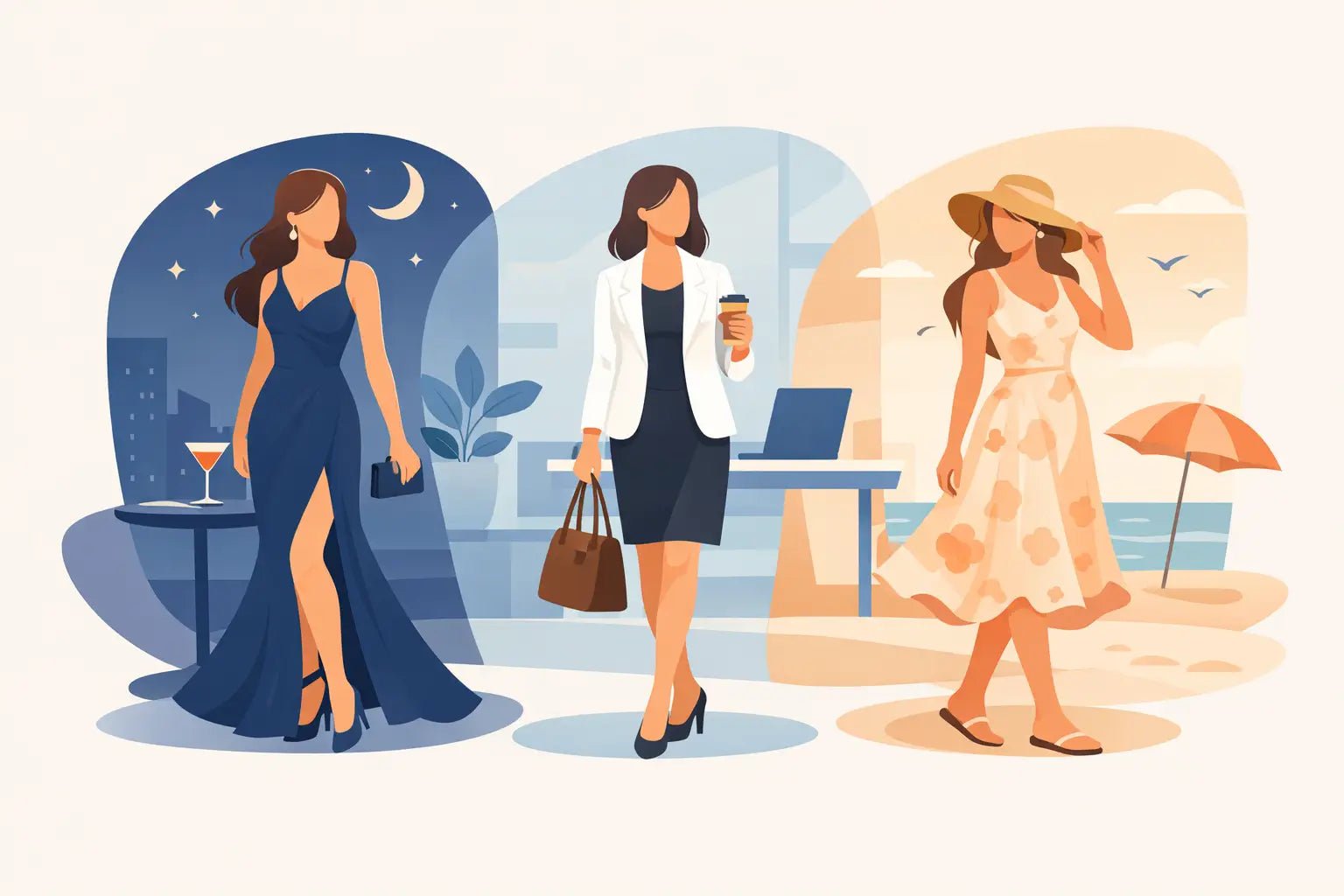
A dress can be the fastest route to feeling put-together, but the details around it decide whether it feels like you or like a costume. These dress styling examples are built for real calendars: a busy morning, a desk-to-dinner plan, a family celebration, or a night when you want to feel a little more polished without overthinking it.
The goal is not to follow a long list of rules. It is to start with a dress that feels good on your body, then use shoes, layers, jewelry, and a handbag to make it fit the moment. A few thoughtful choices can make one favorite dress work in far more places than you might expect.
For casual days, let comfort guide the outfit without giving up on a feminine shape. A soft midi dress in a floral, striped, or solid color looks relaxed with clean white sneakers and a crossbody bag. Add small hoops or simple studs, and you have an outfit that feels intentional for errands, lunch, or a walk through town.
A mini dress can be equally easy to wear when you balance the proportions. Try it with flat sandals in warm weather or ankle boots when temperatures cool. A lightweight denim jacket adds coverage and gives a dressy print a more laid-back feel. If you prefer a little more definition at the waist, choose a jacket that ends near your natural waistline rather than a long, oversized layer.
Maxi dresses are especially helpful on days when you want one piece to do the work. A breezy maxi with flat sandals and a woven or structured tote creates an effortless weekend look. For a more elevated version, trade the tote for a small shoulder bag and add a delicate necklace. The dress stays comfortable, but the accessories signal that you planned the outfit.
The right fabric matters here. Jersey, cotton blends, and soft woven materials tend to feel easier for long days, while a more structured fabric gives a cleaner silhouette. Neither is better in every situation. Choose based on how much movement, weather, and sitting your day involves.
A midi dress is one of the most versatile pieces in a modern wardrobe because its length often feels polished without being fussy. For a professional setting, choose a dress with clean lines, a modest neckline, or a subtle print. Add a tailored blazer, closed-toe flats, loafers, or low block heels. A structured handbag helps bring the whole look together.
Color can quietly set the mood. Navy, black, burgundy, olive, and soft neutral shades make a dress feel office-ready, while a floral or geometric print can still work when the scale is balanced and the accessories stay simple. If your workplace is more creative, a colorful midi dress with a sleek cardigan and pointed-toe flats can show personality while still looking refined.
When the workday turns into dinner, remove the blazer and make one small accessory change. A pair of statement earrings, a slim belt, or a heeled sandal can shift the same dress toward evening. This is where a versatile handbag earns its place. A compact bag with a clean shape looks appropriate at the office and still feels elegant at a restaurant.
Fit is part of professional polish. Make sure you can comfortably sit, reach, and walk in the dress before building the rest of the outfit around it. A size guide is a useful starting point, but how you want a dress to fit also matters. Some women love a softly skimming silhouette, while others feel their best with more room through the hips or bust. Both approaches can look beautifully put-together.
Date-night style does not have to mean a tight dress and high heels. The best choice is one that lets you focus on the person and the plan instead of adjusting your outfit all evening. A fitted or wrap-style midi dress can feel romantic with heeled sandals and a small handbag, while a flowing maxi dress paired with a cropped jacket offers an easy, graceful option for dinner outdoors.
For a more playful look, style a mini dress with knee-high boots or sleek ankle boots. Keep the rest of the outfit balanced with one focal accessory, such as a bold earring or a polished bracelet. If the dress has a bright color, texture, or standout print, neutral shoes and a simple bag usually let it shine.
Layers are especially useful for date nights because restaurants, theaters, and patios can all feel different by the hour. A tailored blazer feels sharp, a soft cardigan feels approachable, and a cropped faux-leather jacket adds a little edge. Pick the layer that matches your personal style instead of forcing the dress into a look that does not feel natural.
For showers, birthdays, brunches, and daytime celebrations, a floral midi or maxi dress is a dependable choice. Pair it with block-heel sandals or dressy flats, then add a handbag in a neutral shade that complements rather than exactly matches your shoes. A delicate necklace and simple bracelet provide enough finish without competing with the dress.
For weddings and evening events, consider the venue before choosing your styling pieces. A garden ceremony may call for wedges or block heels that are easier on grass, while an indoor cocktail event can support a strappier heel or pointed-toe pump. If the invitation suggests a dressier mood, rich colors, satin-like textures, refined jewelry, and a smaller handbag can make even a simple silhouette feel special.
Think about movement, too. A dress with a comfortable waist and enough room through the skirt will be more enjoyable for a long event than one that only looks good standing still. Confidence often comes from knowing you can sit, eat, dance, and take photos without worrying about every detail.
Accessories are not an afterthought. They are what help a dress earn a permanent place in your closet. With just a few swaps, the same midi dress can look casual on Saturday, professional on Monday, and ready for dinner later that week.
Start with shoes. Sneakers make a dress feel fresh and relaxed. Flat sandals keep the look light. Loafers and block heels add polish, while boots bring structure and seasonal warmth. A practical rule is to choose shoes that support the activity first, then consider the color and style.
Jewelry creates a second layer of personality. Small gold-tone hoops, pearl-inspired studs, or a fine chain necklace work well when the dress has print or texture. If the dress is simple and solid, a statement earring or layered necklace can add interest. You do not need every accessory to make a statement. One special piece often looks more elegant than several competing ones.
A handbag can also change the message of an outfit. A roomy tote feels ready for daytime plans, a crossbody keeps things easy, and a compact shoulder bag or clutch brings a dress into evening territory. Choose a bag that fits what you actually need to carry. Style feels more effortless when it supports your real life.
The most useful dress styling examples leave room for your own preferences. You may love a waist belt, or you may prefer the clean line of a dress without one. You may feel your best in flats, even for a special event. You may choose a bold print because it makes you smile, not because a trend says you should wear it.
At JSandiClothing, the idea is simple: elegant style should work for real women and real bodies. Focus on the fit that gives you freedom, the colors that make you feel bright, and the accessories that make getting dressed easier. When your outfit supports your day instead of distracting from it, confidence has room to show up naturally.